.png)
The quickest way to make an induction feel like a bad experience — even when it is clinically safe — is simple: keep a woman awake all night, leave her in pain that goes nowhere and give her no clear plan. The bill then lands back on the ward as more reassurance, more repeat CTGs and another night of bed pressure and staffing strain.¹ ²
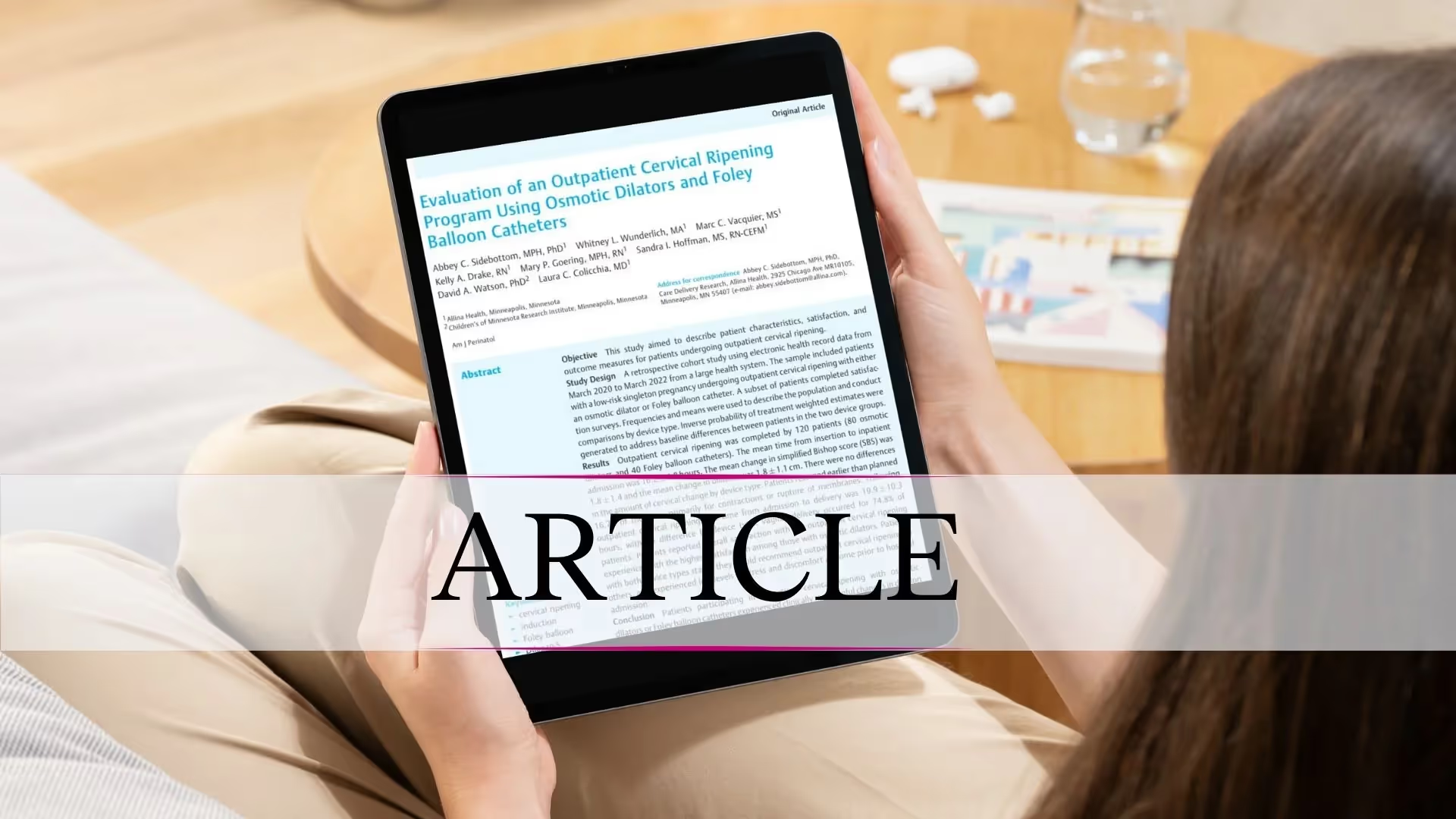
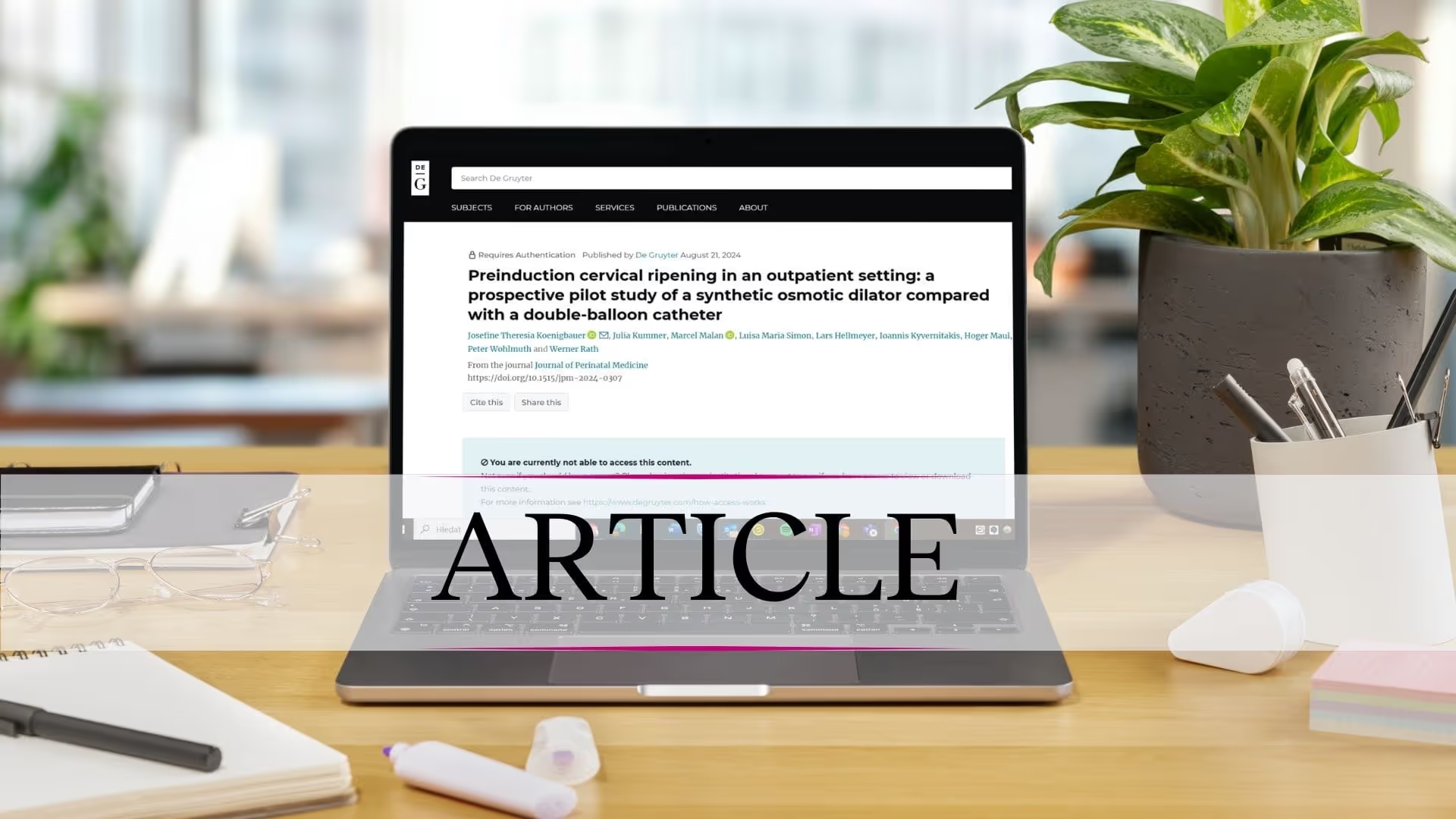
In our previous articles, we looked at induction from the service perspective — how much time mechanical ripening can give back to a stretched team, and whether outpatient induction is a genuine time saver or simply a time shifter. This time, we are asking the same question from women’s side. When they describe a difficult induction, they rarely start with mode of birth. They talk about how long it took, how much it hurt, how little they slept, and how little sense it all seemed to make.¹

What women remember vs what we measure
Most women still put a healthy baby at the top of the list. But once safety is assumed, what distinguishes a “good” induction from a “never again” induction is often the process itself: pain, sleep, information, and whether anything about the experience felt predictable.¹
A large UK postnatal survey found that women often experienced induction as far more painful, disruptive and consequential than services appeared to assume. Inadequate information and frequent delays sat at the centre of many negative accounts.¹ From a governance perspective, the case may look fine: vaginal birth, baby well, no escalation, length of stay within target. From a woman’s perspective, the same induction may be defined by 36 hours of uncertainty and very little sleep before labour has even properly begun.¹
Maternity has become very good at measuring what the system needs to know. It has been less good at measuring what women will actually carry away from the experience.¹
INDEX study gave that problem numbers
The INDEX study did something useful: it put numbers on what many midwives and obstetricians already recognise intuitively.³ A long period of painful contractions and insufficient sleep were risk factors for a negative experience of contractions, while being able to walk for longer periods contributed positively to comfort during cervical ripening.³
That matters because it sharpens the question. If the variables shaping induction experience are pain, sleep and walking time, why are those not the variables we design around?³

On each of those variables, the way we ripen the cervix matters:
- Pain: if ripening provokes hours of strong, unproductive uterine activity, women spend a large part of the induction in pain before labour has even begun.³
- Sleep: if the uterus is being stimulated all night, we make sleep deprivation very likely — and INDEX suggests sleep is not a luxury but one of the main drivers of experience.³
- Walking: if the regimen requires intensive monitoring and fixed positioning, walking time shrinks, and so does comfort; if it allows mobility, comfort improves.³
Once you see it that way, choice of ripening method — and whether we run an inpatient or outpatient regimen — stops being a technical footnote. It becomes part of the experience itself.² ³
Choosing methods that match the variables
Mechanical, non-hormonal methods are one of the few options that can move all three variables in the right direction at once.² ³ If the ripening method is less likely to trigger hours of strong, unproductive uterine activity, women spend less time in purposeless pain during ripening.² ³
If the uterus is not being pharmacologically pushed through the night, there is a real chance of sleep rather than a high risk of sleep deprivation.² ³ If the regimen allows women to mobilise without frequent monitoring or fixed positioning, there is more room for walking, comfort improves, and for some women there is even the option of an outpatient pathway.²
Synthetic osmotic dilators such as DILAPAN‑S sit squarely in that space. They work by gradually absorbing fluid and stretching the cervix over 12–24 hours, without an ongoing prostaglandin effect. Randomised trials and meta-analyses suggest they offer comparable efficacy to standard pharmacological agents, with a favourable safety profile and lower rates of uterine tachysystole and hyperstimulation.² ⁴
Crucially, this is not about trading safety for comfort. The point is to use methods that maintain safety and effectiveness while better matching the variables women actually feel: how much it hurt, whether they slept, and whether they were allowed to move.¹⁻⁴
Communication is not a soft extra
In induction, communication is part of the intervention, not a soft extra.¹ In the CHOICE survey, many women reported that information to support choice and understand what to expect was inadequate or unavailable, and that delays were poorly explained.¹ When expectation-setting is weak, even a clinically straightforward induction can feel chaotic.¹ ²
That is where clear written information helps. A simple, honest leaflet — like the University Hospitals Birmingham induction information or the DILAPAN‑S Labour Induction: Your Step‑by‑Step Guide — can do part of the work before the first agent is even given.² The more clearly women understand what cervical ripening is, how long it may take, what they will be able to do, and what the likely next step is, the less time teams spend firefighting confusion later.¹
Is outpatient ripening the solution?
Once women are told honestly what induction may feel like, the question is no longer just which agent you use, but where that night happens.¹ ² For suitable women, outpatient mechanical ripening can improve experience while easing pressure on beds — a point we explored in more detail in our previous article on outpatient induction.² When part of the ripening phase happens at home, the “night before labour” looks very different.² Instead of trying to rest on a noisy antenatal ward while sharing midwives with a full board, she can sleep in her own bed, use her own bathroom, move around freely and come back rested for reassessment and the next step.¹ ²

The real design question
Clear communication and thoughtful method and regimen selection are the first steps towards an induction pathway that is not only clinically safe and effective, but also bearable – even, at times, positive – for the woman living through it.¹⁻⁴
Women will always put a healthy baby first; experience comes once safety is perceived as a given. The real question is whether we choose the right agent, in the right setting, and explain it well enough that the pathway feels coherent rather than chaotic.¹ ²
So here is a simple design exercise: if you took your current induction protocol and marked every step that makes pain worse, sleep less likely or movement harder — and asked whether it clearly improves safety or efficacy — how many points would you reach, and where do you see room to change them?
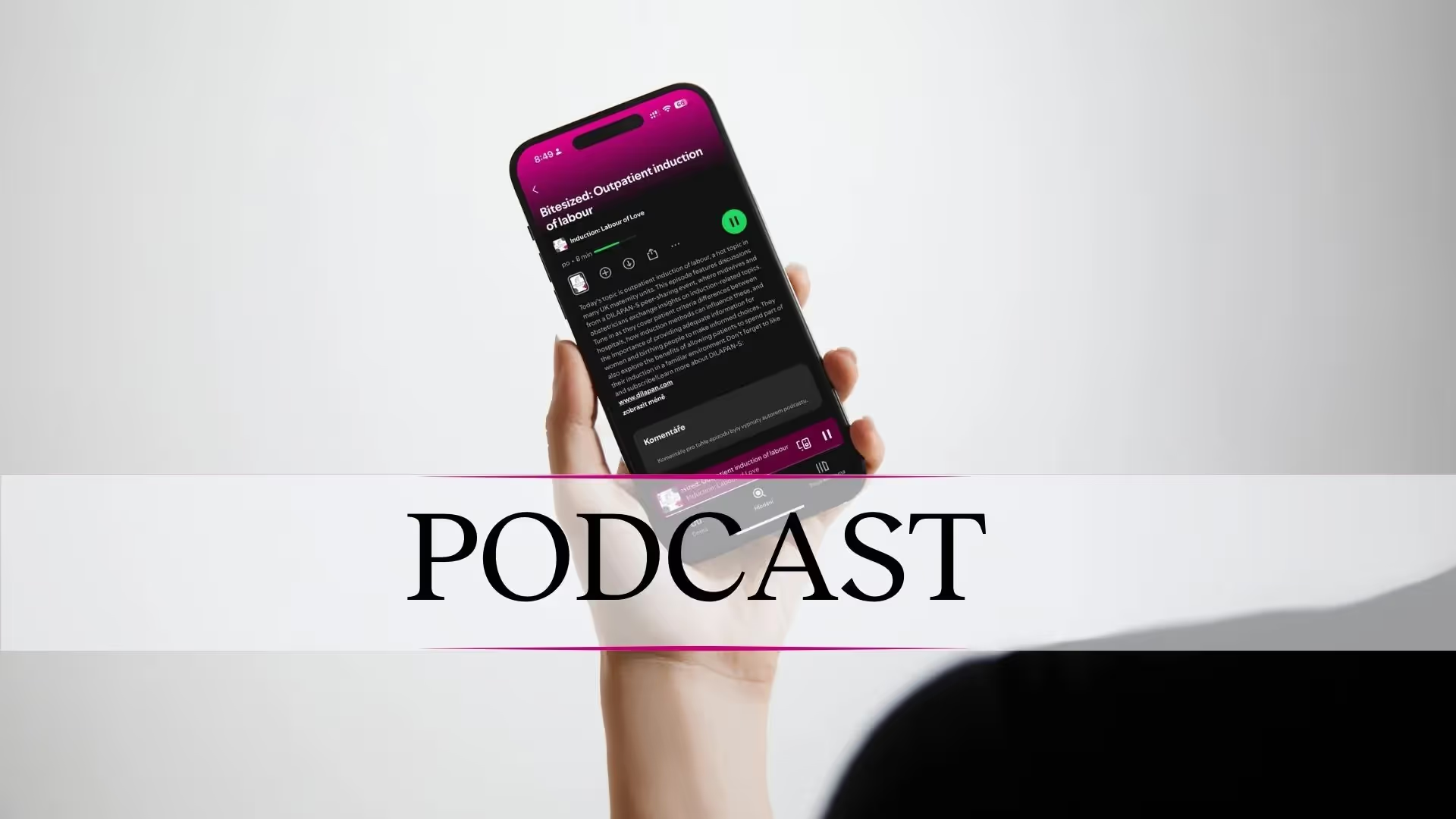
For a wider conversation on the pressures reshaping UK induction pathways, the Induction: Labour of Love podcast features candid discussions between midwives and obstetricians navigating these very challenges. Further clinical evidence and resources are available at dilapan.com.
References
- Harkness M, Yuill C, Cheyne H, et al. Experience of induction of labour: a cross-sectional postnatal survey of women at UK maternity units. BMJ Open. 2023;13:e071703.
- Schmidt M, Saad AF, et al. Synthetic osmotic dilators for pre-induction cervical ripening: evidence for efficacy, safety and low hyperstimulation rates, including suitability for outpatient cervical ripening; plus associated DILAPAN‑S economic and time‑saving analyses.
- Vermare J, Rouzaire M, et al. INDEX (Induction Experience) assessment of how women feel about induced labour: a prospective observational study. Eur J Obstet Gynecol Reprod Biol. 2025.
- Gupta J, et al. Synthetic osmotic dilators (DILAPAN‑S) versus dinoprostone vaginal insert for induction of labour (SOLVE trial and related analyses): similar vaginal delivery rates with lower uterine tachysystole/hyperstimulation and better maternal satisfaction.
.png)
.png)
.png)
.png)


.avif)